It’s your world, learn about how to detoxify it!
Detoxification (biotransformation) is a vital part of our daily function. Our bodies have an amazing ability to adapt to our environment. This adaptation is determined by the environment around us and the way our body responds to stimulus from our environment. It is becoming more obvious that our internal environment and external environment have to come into balance with one another, as our fates are intertwined. That balance over time will ultimately determine our perceived health and the health of our internal environment.
Our detoxification pathways have much work to do just to maintain our daily function. Consider that about 25% of all the cells in our body are red blood cells.1 They typically live for 3–4 months and are then broken down in our body and detoxified. It is important to note that there are 20–30 trillion RBCs in the body and they all must be broken down and removed every 3–4 months.1 In addition our detoxification pathways must also clear out excess and ‘used’ hormone, neurotransmitters, as well as other metabolic waste. This is just the normal work for our detox pathways. They also breakdown environmental toxins such as drugs, medications, other pollutants from our environment. The additional demand we place on these pathways from environmental stresses will have a lasting impact on our lives and result in consequences for our long-term health.
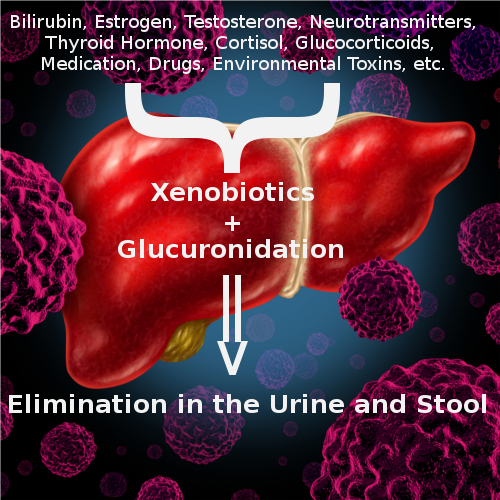
There are several important detoxification pathways to consider, however, in this article I am going to focus on glucuronidation. I chose Glucuronidation for this article because it is a favored pathway for removal of excess estrogen, testosterone, thyroid hormone, medication, pollutants, bilirubin, and other substances collectively known as xenobiotics.56 Glucuronidation describes the addition of glucuronic acid to a xenobiotic substance to allow for it’s excretion through urination or bowel movement. The attachment of glucuronic acid to xenobiotics is mediated by various types of UGT (uridine diphosphate glucuronosyl transferase) enzymes which tend to favor different xenobiotics4 — for example, the specific UGT isoforms responsible for glucuronidating warfarin’s hydroxylated metabolites are not the same ones that handle other drugs.4
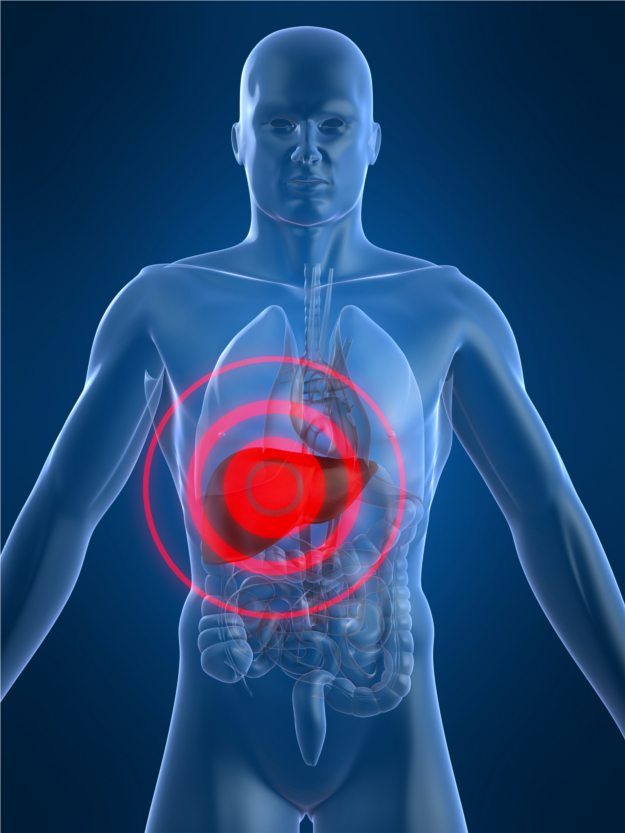
Although the body uses several other pathways for elimination of xenobiotics, glucuronidation is often preferred in cases where high amounts of detoxification are needed. As with other phase-two detoxification pathways, the majority of glucuronidation takes place in the liver (but it is not exclusive to the liver, i.e. it plays a major role in protection of the nervous system in the blood-brain-barrier), however UGT (glucuronidation enzyme) can be found nearly everywhere in the body.23
Demand on glucuronidation pathways from a toxic environment, frequent medication or drug use, and high ambient stress will wear down the body’s ability to appropriately detoxify. This presents an even larger problem when considering that an estimated 5–30% of the population have genetic variations that decrease the efficiency of glucuronidation pathways.2 These genetic variations can be so profound as to limit the body’s ability to even perform its normal function of red blood cell breakdown, resulting in excess bilirubin (jaundice). This is also the driving force behind Gilbert’s Syndrome.2
Even without full blown Gilbert’s Syndrome, compromised efficiency of glucuronidation pathways combined with xenobiotic stress from a toxic environment is a recipe for declining health. Unfortunately, compromised glucuronidation pathways (even in cases of Gilbert’s Syndrome) are dismissed as normally having no serious consequences. In a perfect world, one could hope that was true. In reality, our environment rarely allows that to be the truth.

Pathways that can back up glucuronidation, such as glutathione detoxification pathways, are dependent upon the amount of xenobiotic exposure, the amount of time you were exposed, diet & nutrients, and genetic variations that limit production and ultimately the availability of reduced glutathione (GSH). The point being, that it is possible to overwhelm your body and its ability to efficiently detoxify effects from the external environment as well as their impact on the internal environment of your body. The frequency with which we do this wears down our body’s ability to protect our most sensitive internal systems: nervous system, hormones, immune system, DNA repair, new cell production, and timely cell death.78
Glucuronidation pathways may play a huge role in your health. Consider the following real-life scenarios that would go unnoticed and unrecognized by most doctors:
The ‘thyroid patient’ who may not be able to cycle out T4 efficiently via glucuronidation pathways that are compromised and therefore the thyroid gland is not signaled to produce new hormone creating hypothyroid function.
The family that can’t conceive and maintain a pregnancy because excess hormone can’t be cleared via compromised glucuronidation pathways. Therefore the uterus can’t sustain implantation of the developing baby.
The patient who doesn’t want to leave the house because they can’t rebalance neurotransmitters that weren’t appropriately cleared because of compromised glucuronidation pathways.
The patient who has chronic heartburn because stress hormones can’t be cleared efficiently because glucuronidation pathways are not functioning efficiently. Which leaves the patient in a fight or flight (sympathetic dominant) state where digestive function is impaired.
The patient who had progressively increased neurological symptoms because they have been given antibiotics and no probiotics. Allowing C. Difficile to overpopulate the digestive tract which overwhelms the detoxification pathways leading to excess dopamine.
The patient whose doctors can’t find the right dosage of medication or the cause of their problems. Their immune system can’t restore balance due to inefficient glucuronidation of immune feedback signals such as glucocorticoids.5
We are left with a simple choice: Detoxify or get a sicker quicker. Many people look at the choices they can make to improve their health and opt not to do them right away, or worse yet, talk themselves into poor choices. Unfortunately, our current popular media outlets, a large amount of industry-biased scientific research, and our most promoted health advisers do little to help sway these choices. Instead we are bombarded with information that leaves us wanting for better health and at the whim of people who tell us that simple, easy things can replace worthwhile habits and choices. Often times ignoring the inner voice of reason which tells us something is too good to be true, or that something sketchy should be trusted.
We are left with a simple choice: Detoxify or get a sicker quicker.
In Good Health,
Dr. Richard Robles

Our Nutrigenomic Evaluation will identify gene variants that may be negatively affecting your health.
Ask About A Nutrigenomic Evaluation
The manual that started it all — by Dr. Richard L. Robles, DC.
Get The BookEvery health association named above is drawn directly from the peer-reviewed studies below (plus one AI-summarized web source, noted as such). Tap a footnote number in the text to preview its citation, or browse the full list here.
Guided, structured next steps from Dr. Robles — beyond what’s on this page.
A free 5-day email series to get you started — the primary cause of poor health and what to do about it right away, techniques to decrease stress and anxiety immediately, four simple methods anyone can use to improve their health, and how to build momentum that lasts. Registrants also get 50% off The Path To Health book.
Learn More →A self-guided, five-phase framework — Assessment, Purpose, Plan, Action, Heal — that walks you through organizing your symptoms and lab results, understanding what they’re telling you, building a prioritized action plan, adopting the right habits and supplements, and tracking your healing over time. Built to be retaken any time you want to reassess.
Learn More →A structured 14-day meal plan built around better choices, not more work — simple, flavorful recipes and a shopping list designed to take only 2–4 days of shopping. Built to help you feel better, reduce pain, gain energy, sleep better, and lose weight.
Learn More →